
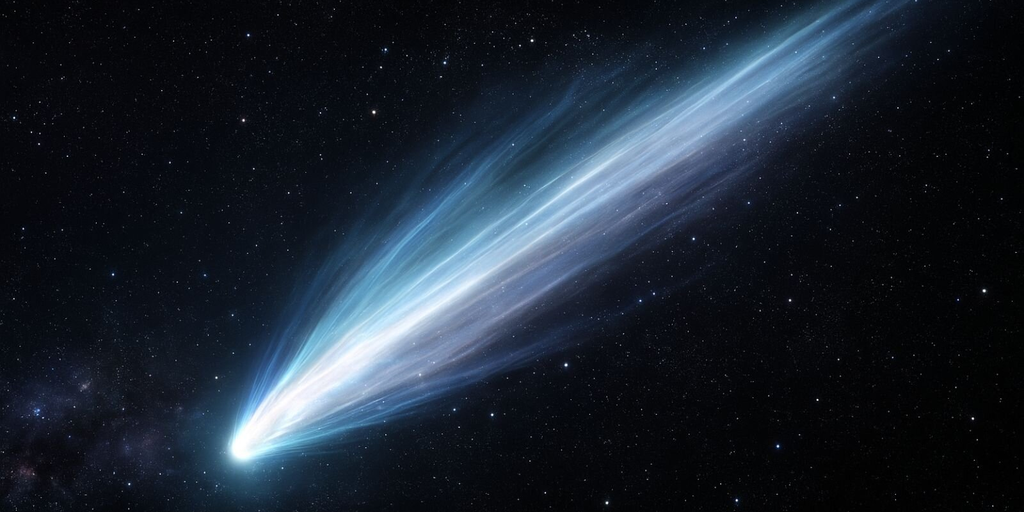

NASA has officially confirmed that interstellar object 3I/Borisov, previously designated Comet Atlas, exhibits characteristics consistent with natural cometary bodies, dispelling weeks of public conjecture about potential anomalous origins. Agency scientists emphasized that comprehensive data analysis from multiple observatories reveals standard cometary activity, including outgassing and dust tail formation typical of icy celestial bodies.
Dr. Thomas Zurbuchen, NASA’s Associate Administrator for Science, stated, ‘Our observations confirm 3I/Borisov follows predictable orbital mechanics and displays conventional cometary features. While interstellar visitors remain scientifically valuable for understanding planetary formation beyond our solar system, this object presents no extraordinary properties.’
The comet, first detected in August 2019, represents only the second confirmed interstellar object observed within our solar system. Research teams worldwide continue to monitor its trajectory and composition, gathering crucial data about materials from distant star systems. Current spectroscopic analysis indicates familiar molecular compounds including cyanogen and diatomic carbon, consistent with known cometary chemistry.
NASA’s Solar System Exploration Division maintains that continued public interest in interstellar objects demonstrates growing engagement with astronomical discoveries, while reinforcing the importance of evidence-based analysis in celestial observations.